
Reviewed by Hasitha K. Balasooriya · Managing Director, Gemszen (Pvt) Ltd · 8 years of gem-industry experience · Updated 6 October 2026
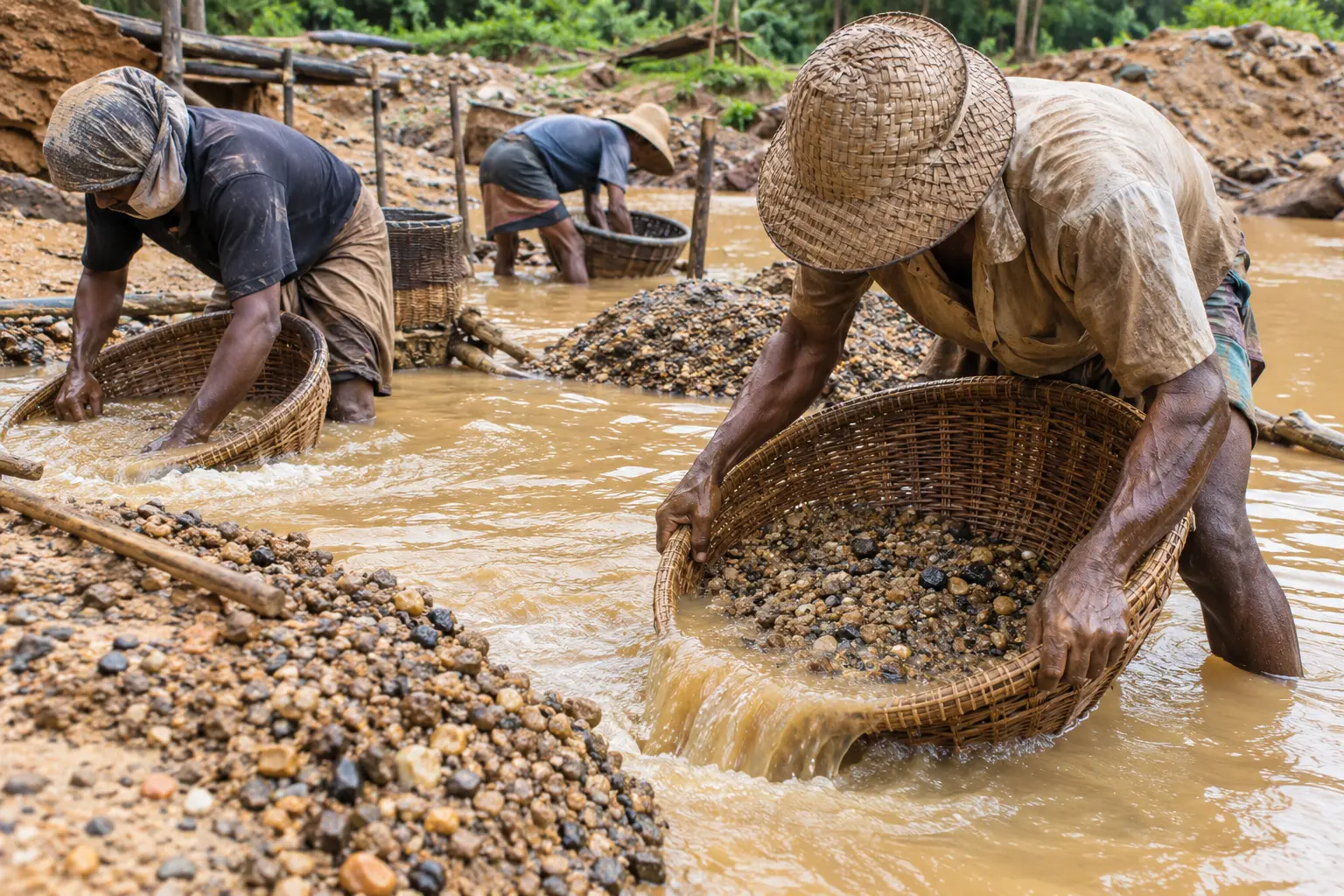
ශ්රී ලංකාවේ බොහෝ මැණික් හමුවන්නේ ගංගා හා පැරණි ජල මාර්ග ආශ්රිතව තැන්පත් වූ ඉල්ලම් ස්ථරවලය. පතලක් ආරම්භ කිරීමට පෙර නීතිමය බලපත්ර, ආරක්ෂාව සහ පරිසර වගකීම අත්යවශ්යය.
How alluvial deposits form
Weathering releases resistant gem minerals from ancient source rocks. Water transports and concentrates them with gravel in channels, floodplains and other low areas. These secondary deposits can contain gemstones from more than one original source.
Traditional mining and washing
Miners identify promising gravel layers, recover material and wash it so heavy minerals remain for careful sorting. Methods vary by ground conditions and operation scale. Safe construction, water control and experienced supervision are essential.
Responsible and legal operations
Gem mining should comply with Sri Lankan licensing and environmental requirements. Site safety, land restoration, water management and fair working practices are part of responsible industry conduct.
Frequently asked questions
What is illam?
Illam is the local name commonly used for gem-bearing gravel or a layer considered promising for gemstones.
Are Sri Lankan gems found only in Ratnapura?
No. Ratnapura is famous, but gem deposits occur in several areas of the country.
Can anyone start a gem mine?
Mining requires suitable land, technical knowledge, safety planning and the relevant Sri Lankan approvals and licences.