
Reviewed by Hasitha K. Balasooriya · Managing Director, Gemszen (Pvt) Ltd · 8 years of gem-industry experience · Updated 6 October 2026
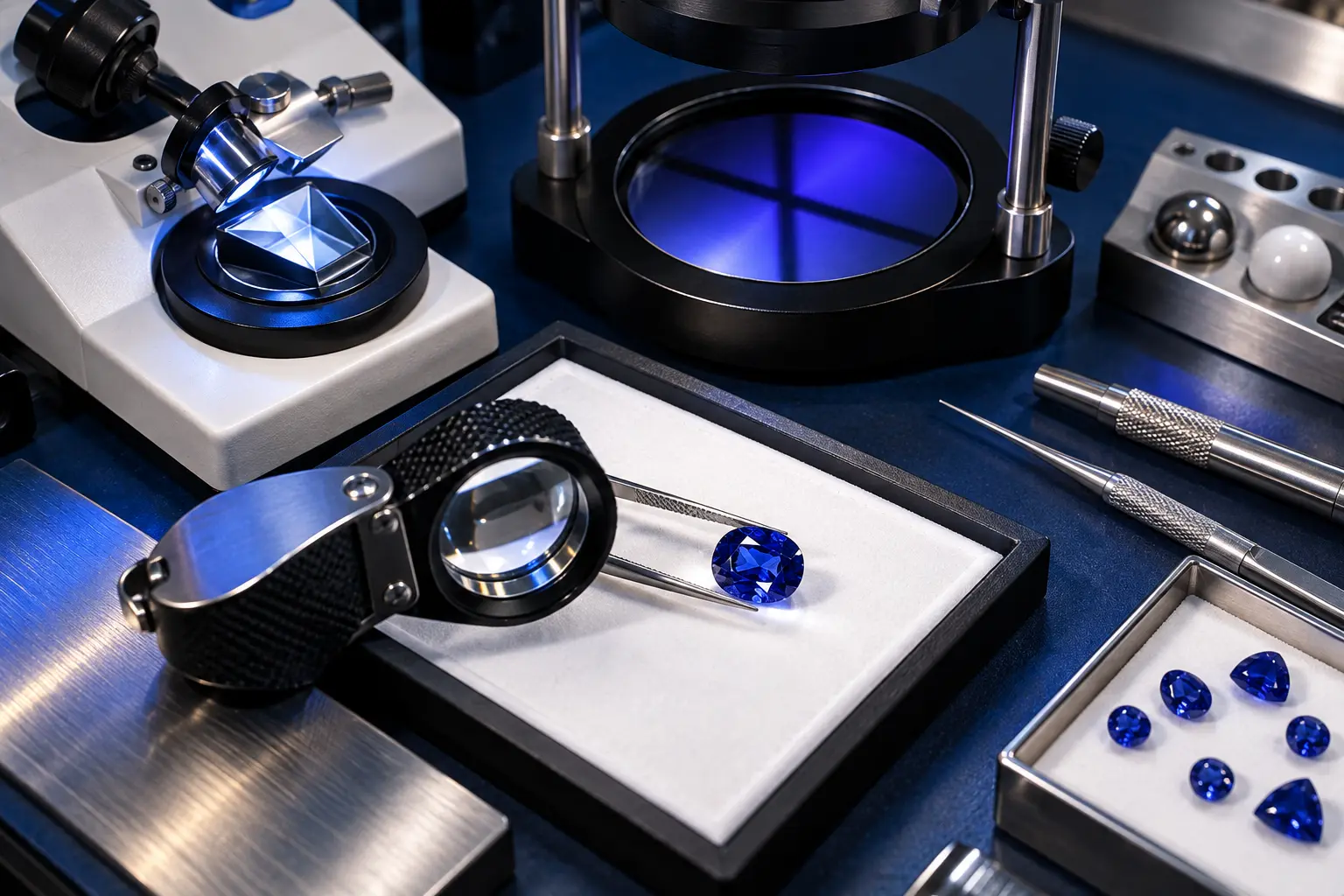
Natural gemstone එක ස්වභාවිකව බිහිවෙයි. Synthetic gemstone එක රසායනාගාරයක නිපදවුවද ස්වභාවික ගලට සමාන රසායනික හා භෞතික ගුණ තිබිය හැක. Imitation එක පෙනුම පමණක් අනුකරණය කරන වෙනත් ද්රව්යයකි.
Natural gemstones
A natural gemstone forms through geological processes without human manufacture. It may still have been treated after mining. The words natural and untreated therefore describe two different questions.
Laboratory-grown gemstones
A synthetic or laboratory-grown gemstone is manufactured by people but has essentially the same chemical composition, crystal structure and many physical properties as its natural counterpart. Identifying it can require microscopic observation and advanced instruments.
Imitations and misleading assumptions
An imitation resembles another gem in appearance but has different composition or structure. Glass can imitate sapphire, while assembled stones may combine different materials. Colour, hardness or a simple scratch test alone cannot provide a reliable identification.
Frequently asked questions
Is synthetic sapphire real sapphire?
It is laboratory-grown sapphire with corundum composition, but it is not a natural gemstone and must be disclosed as laboratory-grown or synthetic.
Can a torch prove a gemstone is natural?
No. A torch can reveal useful observations, but it cannot by itself prove natural origin or treatment status.
Are all inclusions proof of a natural gem?
No. Laboratory-grown stones can also contain characteristic inclusions. Identification depends on the complete evidence.