
Reviewed by Hasitha K. Balasooriya · Managing Director, Gemszen (Pvt) Ltd · 8 years of gem-industry experience · Updated 6 October 2026
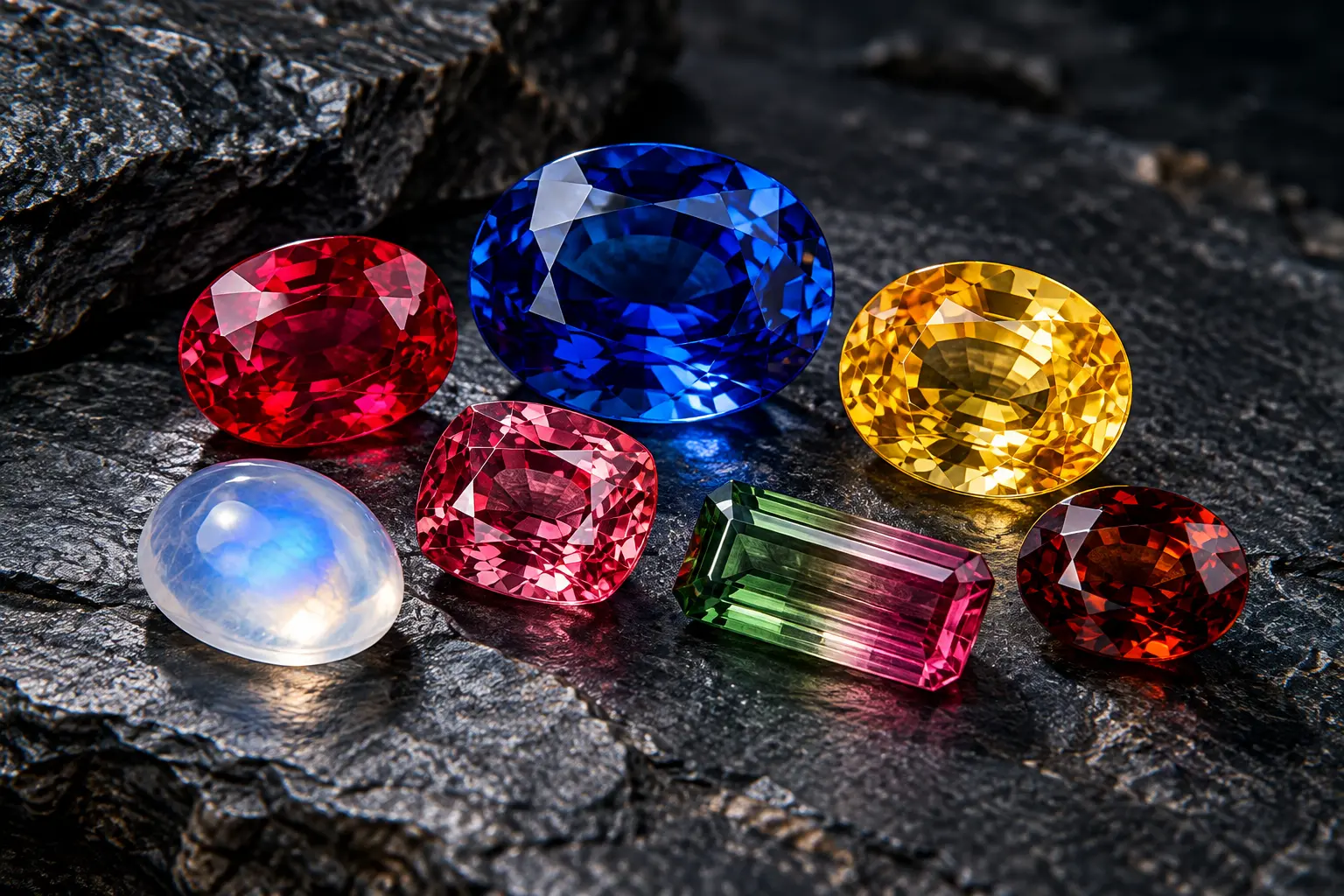
මැණික් වර්ග mineral species, groups සහ varieties ලෙස වර්ග කළ හැක. Corundum family එකට Ruby සහ Sapphire අයත් වන අතර Beryl, Garnet, Quartz, Feldspar, Tourmaline, Spinel, Chrysoberyl, Zircon සහ Topaz වෙනත් වැදගත් කාණ්ඩ වේ.
Species, groups and varieties
A mineral species has a defined chemical composition and crystal structure. A group contains related species, while a variety name may describe colour or another feature. Ruby and sapphire are varieties of corundum; emerald and aquamarine are varieties of beryl.
Major coloured-stone families
Important families and species include corundum, beryl, chrysoberyl, spinel, garnet, tourmaline, quartz, feldspar, topaz and zircon. Each has characteristic property ranges, treatments, inclusions and market terminology.
Why correct classification matters
Similar colours can occur in unrelated materials. A red stone might be ruby, spinel, garnet, tourmaline, glass or a laboratory-grown product. Identity must be established before quality, rarity and value can be discussed responsibly.
Frequently asked questions
Are ruby and sapphire in the same family?
Yes. They are colour varieties of the mineral corundum.
Are emerald and aquamarine related?
Yes. Both are varieties of beryl with different colour-causing trace elements.
Is zircon the same as cubic zirconia?
No. Zircon is a natural mineral species, while cubic zirconia is a manufactured diamond simulant.