
Reviewed by Hasitha K. Balasooriya · Managing Director, Gemszen (Pvt) Ltd · 8 years of gem-industry experience · Updated 6 October 2026
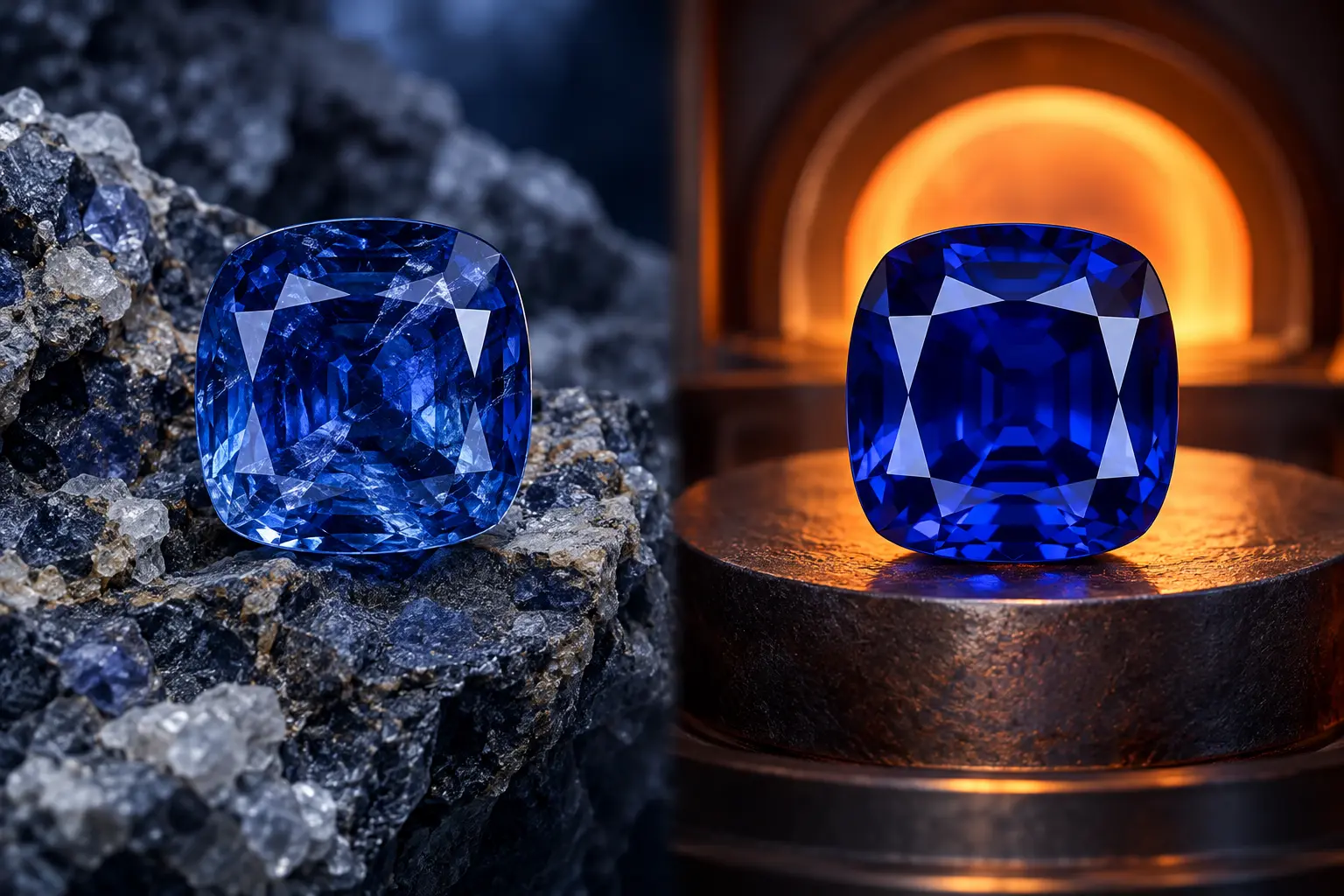
තාප පිරියම් කළ මැණිකක් අනිවාර්යයෙන්ම ව්යාජ ගලක් නොවේ. එය ස්වභාවික ගලක් විය හැකි නමුත් පසුකාලීනව රත් කර වර්ණය හෝ පැහැදිලිභාවය වැඩි කර තිබිය හැක. විකිණීමේදී ඒ බව පැහැදිලිව සඳහන් කළ යුතුය.
Why sapphire is heated
Controlled heating can alter colour-causing features and reduce the appearance of certain inclusions. Results range from subtle improvement to significant colour change. The durability implications depend on the material and treatment conditions.
Why unheated stones may command a premium
A fine sapphire with laboratory evidence of no indications of heating may be rarer than a comparable heated stone. However, “unheated” does not automatically mean beautiful or valuable: colour, clarity, cut, weight and overall appearance still matter.
How treatment is detected
Gemologists examine inclusions, colour zoning and other internal features, then use laboratory instruments when needed. Consumers should avoid claims based only on visual inspection and request a report for important purchases.
Frequently asked questions
Is a heated sapphire natural?
It can be natural sapphire that was mined and later treated. Natural origin and treatment status are separate descriptions.
Can heat treatment be seen with the naked eye?
Usually not reliably. Laboratory examination may be required.
Should heated sapphire be avoided?
Not necessarily. Properly disclosed heated sapphire is widely traded. The decision depends on quality, price, purpose and buyer preference.