
Reviewed by Hasitha K. Balasooriya · Managing Director, Gemszen (Pvt) Ltd · 8 years of gem-industry experience · Updated 6 October 2026
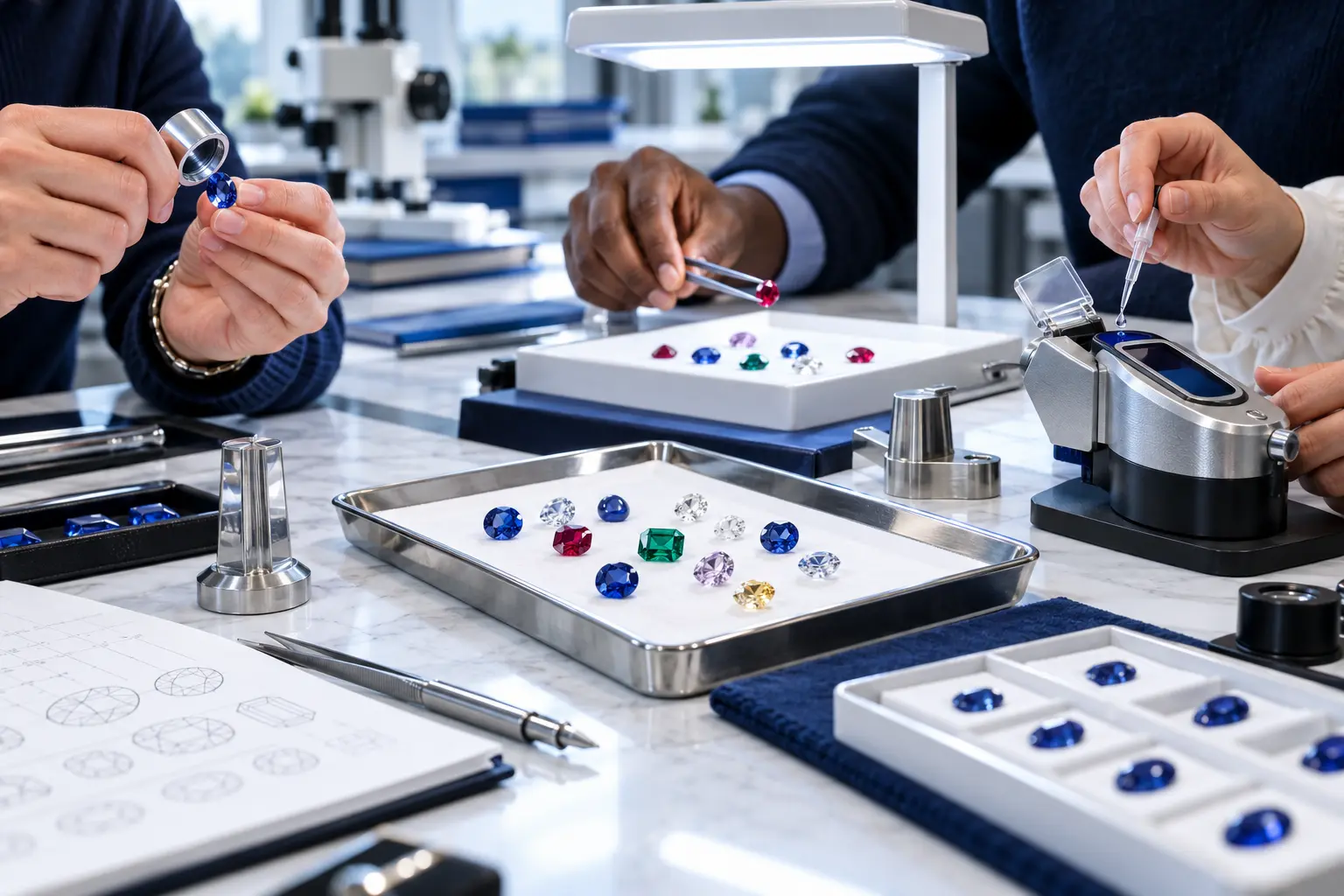
Loupe, torch, refractometer, polariscope, dichroscope, spectroscope, UV light සහ microscope වැනි උපකරණ විවිධ පරීක්ෂණ සඳහා භාවිත කරයි. එක් tool එකක result එකෙන් පමණක් අවසාන identification එකක් දිය නොහැක.
Basic observation tools
A 10× loupe, clean tweezers and suitable neutral light help examine colour, transparency, surface condition, inclusions and possible assembly lines. A scale and calliper record weight and dimensions, while a microscope provides higher magnification and controlled lighting.
Optical testing instruments
A refractometer measures refractive index within its operating limits. A polariscope studies optical behaviour, a dichroscope separates pleochroic colours, and a spectroscope displays absorption features. These results are compared with known property ranges.
Screening versus confirmation
Chelsea filters and ultraviolet lamps can provide useful reactions, but they are not stand-alone identification tools. Difficult natural-versus-synthetic and treatment questions may require advanced laboratory spectroscopy, imaging and chemical analysis.
Frequently asked questions
What should a beginner buy first?
A reliable 10× loupe, suitable light, tweezers, gem cloth and accurate scale are practical starting tools.
Can a refractometer identify every gemstone?
No. Some stones are outside the instrument’s range, have unsuitable surfaces or require additional tests.
Can a UV lamp prove a stone is natural?
No. Fluorescence is supporting evidence only and must be interpreted with other observations.