
Reviewed by Hasitha K. Balasooriya · Managing Director, Gemszen (Pvt) Ltd · 8 years of gem-industry experience · Updated 6 October 2026
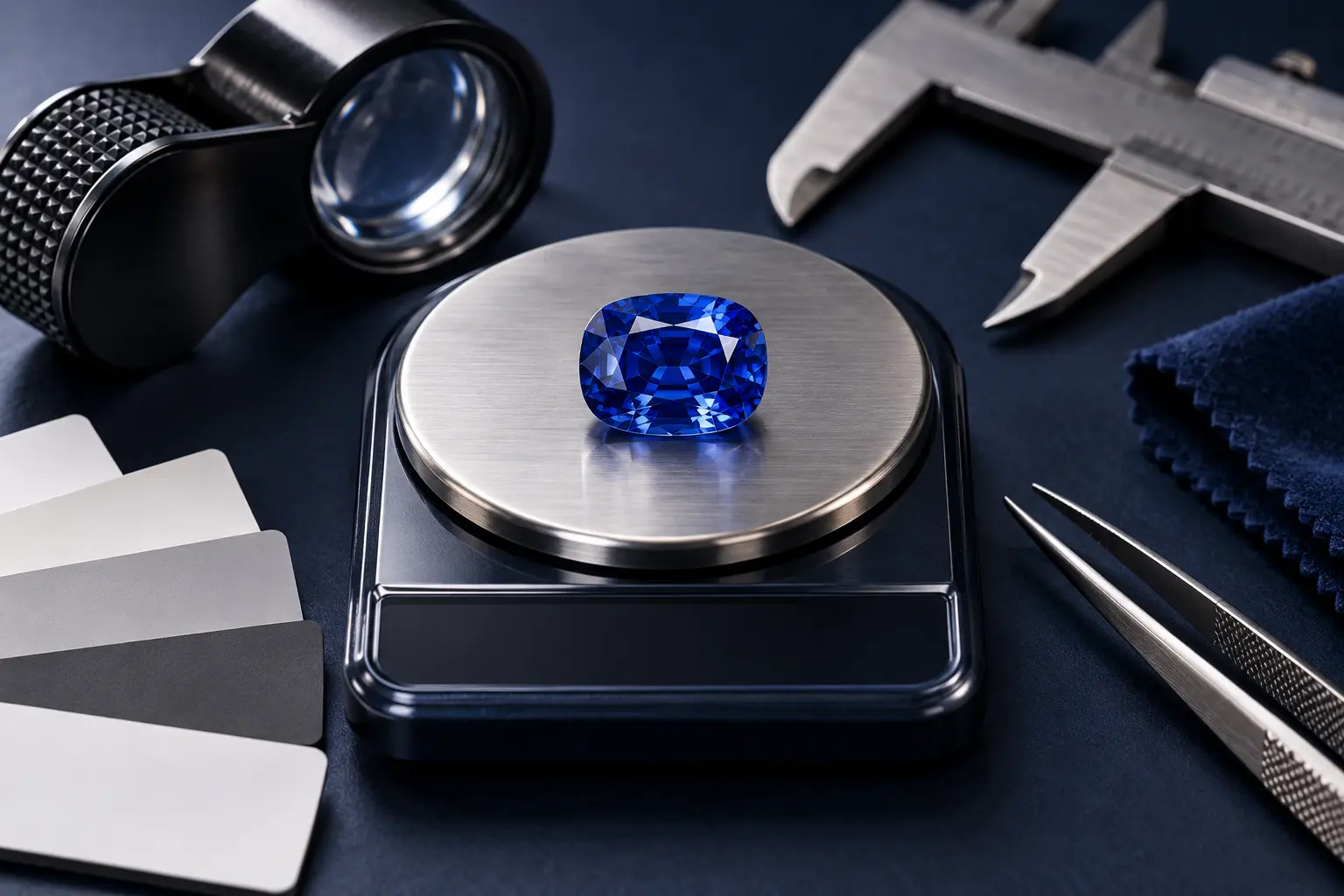
Refractive Index, Specific Gravity, Mohs Hardness, cleavage, fracture, lustre සහ transparency මැණික් හඳුනාගැනීමට සහ durability තක්සේරු කිරීමට උපකාරී වන ප්රධාන ගුණාංග වේ.
Refractive index and optical behaviour
Refractive index describes how strongly light slows and bends when entering a material. Some gemstones show one principal refractive behaviour, while doubly refractive stones can produce two readings or optical directions. Results must be measured correctly and compared with accepted ranges.
Specific gravity and hardness
Specific gravity compares a material’s density with water and can support identification when measured accurately. Mohs hardness ranks resistance to scratching, but it does not measure toughness, stability or overall durability. Scratch testing can damage finished stones.
Cleavage, fracture, lustre and transparency
Cleavage is a tendency to split along structural planes; fracture describes breakage outside cleavage. Lustre is the appearance of reflected light from a surface. Transparency ranges from transparent through translucent to opaque and can be affected by inclusions and treatment.
Frequently asked questions
Does high Mohs hardness mean a gem cannot break?
No. Hardness measures scratch resistance, while toughness concerns resistance to breaking and chipping.
Can specific gravity identify a gemstone by itself?
Usually not. Overlapping ranges and measurement errors mean it should be combined with other tests.
What is the refractive index of corundum?
Natural corundum commonly falls around RI 1.762–1.770, but proper testing and interpretation are still required.